Fighting Fire with Fire: A Restoration Forester’s Journey
As wildfires blaze across the Pacific Northwest, firefighters across the region are working to contain the flames. Ever wonder what it takes to become a wildland firefighter, and what else it’s good for? We sat down with part-time NNRG Restoration Forester Gustavo Segura Flores to find out. After becoming a full-time Pre-Sales Forester for the Quinault Division of Natural Resources in 2024, Gustavo recently decided to pursue his wildland firefighter certification.
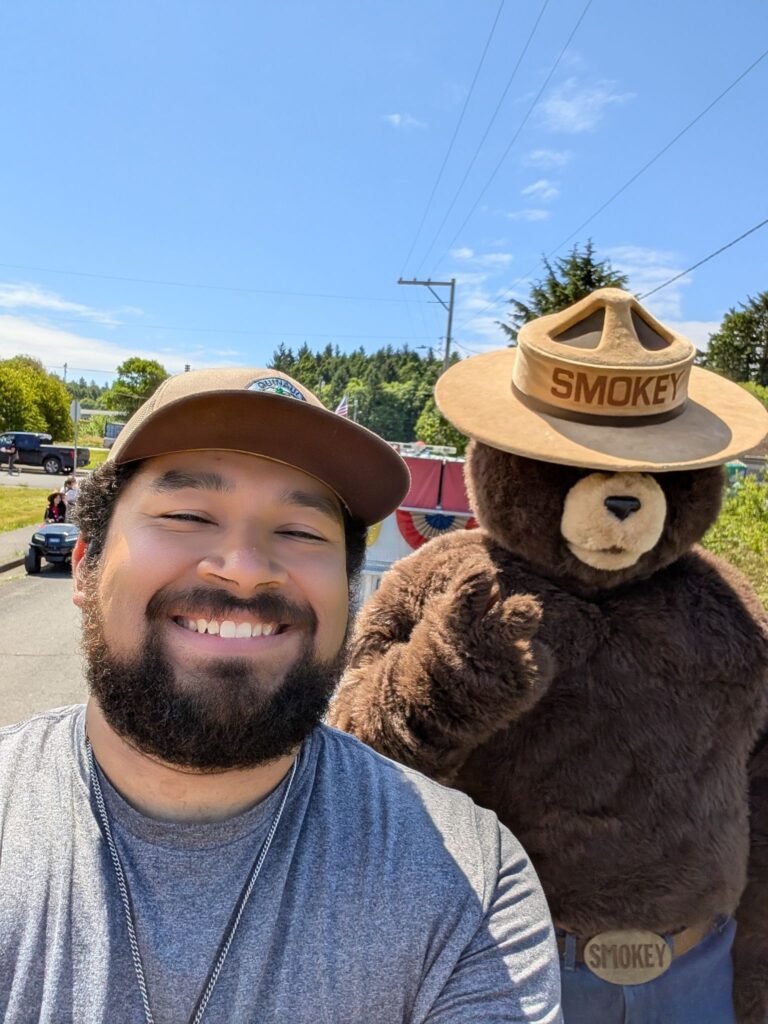
NNRG Restoration Forester and QDNR Pre-Sales Forester Gustavo Segura Flores with Smokey Bear on a 4th of July Parade Escort.
His inspiration wasn’t just about putting out fires once they’ve started: “At NNRG, fire is a big part of our forest management plans. But I wanted to [get my certification] and do the reverse. I wanted to see how these fires develop, and how I can better manage wildfires from firsthand experience.”
Firefighting on the Quinault Reservation
Although employed by the Quinault Tribe, Gustavo developed firefighting techniques applicable to Washington’s temperate rainforests and eastside ecosystems alike, in the event he’s called to help other agencies elsewhere. Historically, damp fuels and short fire seasons made severe wildfire in western Washington’s wet, high-biomass forests rare but devastating, although new research shows that low- to moderate-intensity fires were more frequent than previously thought. Exacerbated by climate change, drier summers and longer fire seasons increase these rainforests’ risk of catastrophic fire. Even in the fire-adapted landscapes of eastern Washington, decades of fire suppression have increased forests’ vulnerability to wildfire. Because Quinault Reservation firefighters respond to wildfires statewide (including at the Yakama Reservation and Mount Rainier), Gustavo’s training included firefighting practice in grass-dominated ecosystems, dry eastside forests, and dense, coastal rainforests.
In any environment, digging a miles-long firebreak (or “fireline”) to bare soil is arduous work. In western Washington’s high-biomass forests, thick understories, dense roots, and fallen logs on the fireline mean additional vegetation that firefighters must remove: “On grasslands, it’s fairly easy. It’s just a bunch of grass that you pull back and get out of the way. Once you move into the Pacific Northwest forests, there’s roots and “red rot,” which are rotted logs that happen to fall on your line. It’s a whole different beast of trying to make that [fireline] out here compared to prairie ground. I’m sure you’ve seen a couple of forests out here. Digging a bare earth, two-foot wide line for miles, you can see the difficulty in that.”
Depending on where a wildfire begins, the equipment needed for containing a fire will vary. When responding to a beach fire caused by 4th of July fireworks, Gustavo and the Quinault Indian Nation (QIN) fire crew only needed to use Pulaskis (a combination ax and mattock): “Since we were working on a beach, we didn’t need to pull roots.” In forested ecosystems, Gustavo considers McLeods (combination large hoe and coarse rake) and chainsaws also essential.
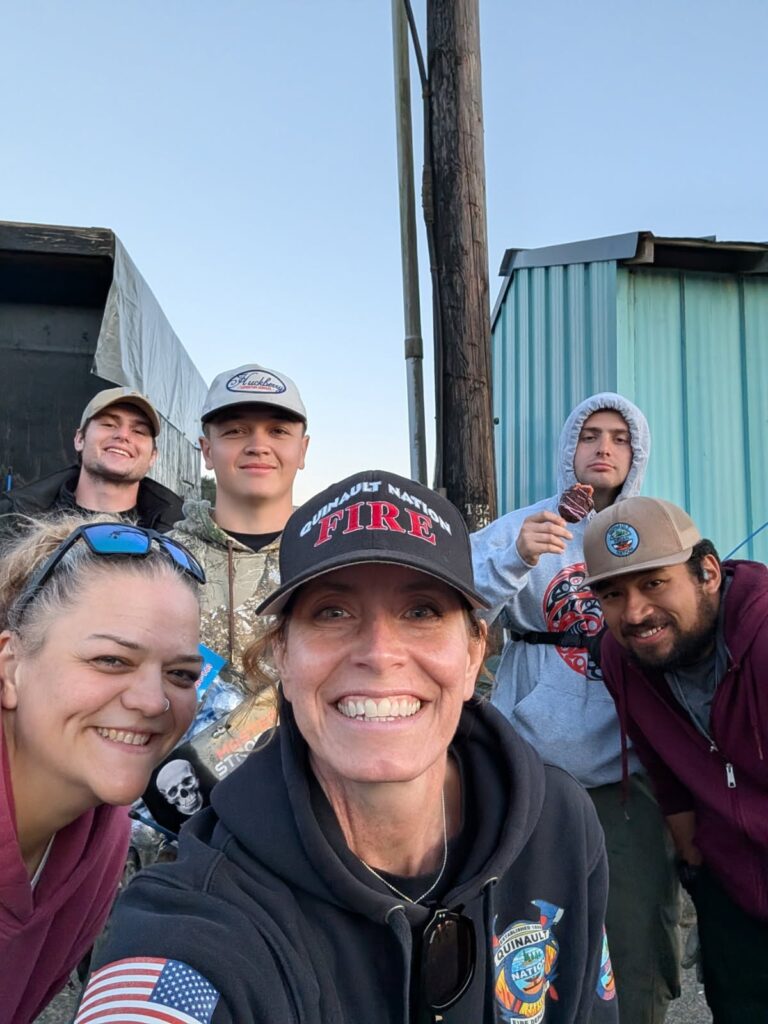
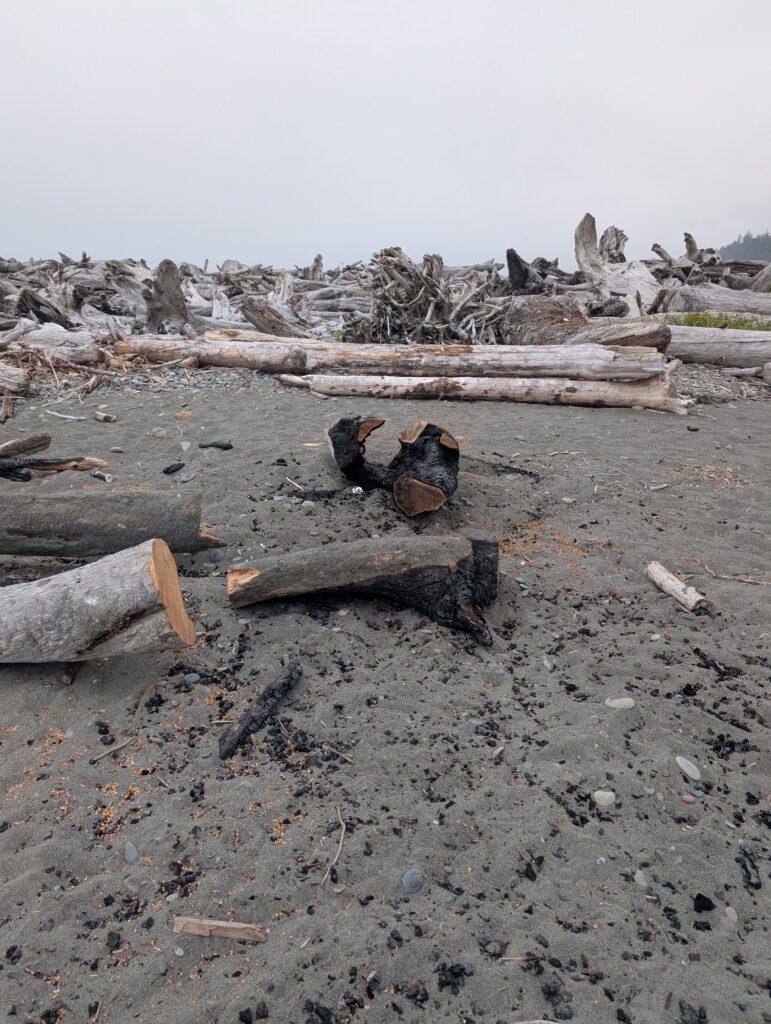
The aftermath of a beach fire (right) that Gustavo and the QIN crew (left) contained with Pulaskis.
Now certified, Gustavo believes experience with wildland fire will enhance his future restoration work: “I would like to focus on prescribed fires, especially on Tribal grounds. The Tribe is looking into doing some prescribed fires for prairies on [the reservation]. The only people that can operate on those are people with red cards.” Established by the National Wildfire Coordinating Group, an Incident Qualification Card (or “red card”) verifies a wildland firefighter’s credentials and eligibility to work on a fireline. Eventually, Gustavo hopes to assist QIN on landscape restoration projects following prescribed fire treatments. Reflecting on his future work at NNRG, Gustavo says, “as a restoration forester, if I can literally be on the front line seeing that impact, I think that’ll give me valuable experience for managing and planning restoration projects of that scale.”
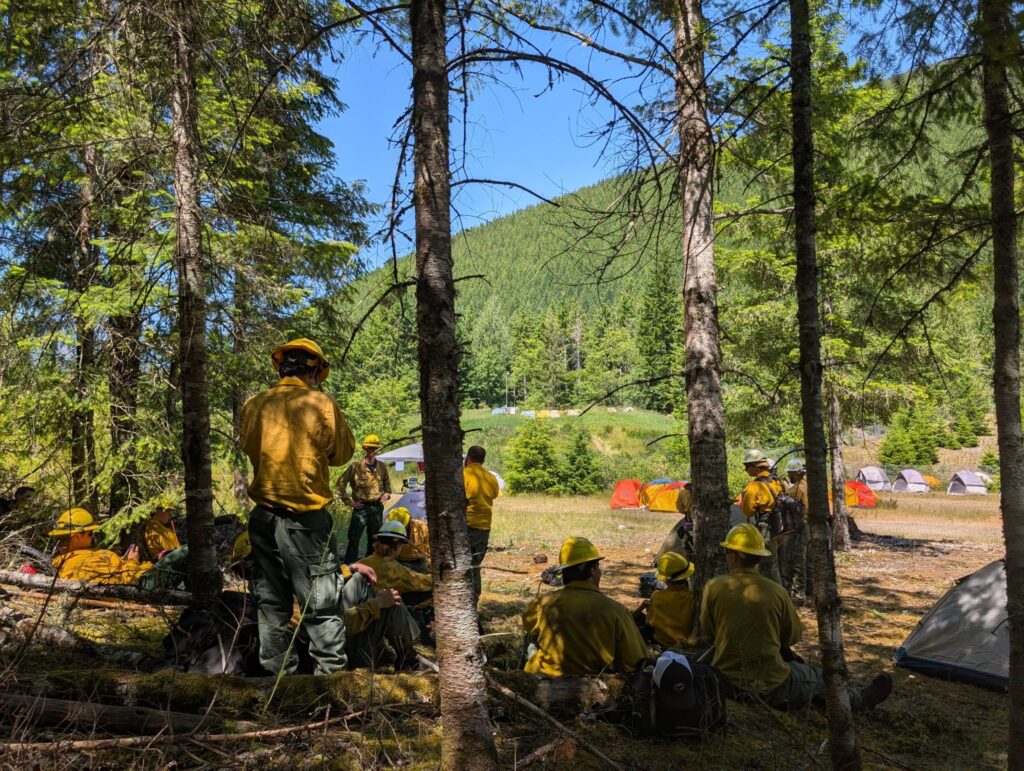
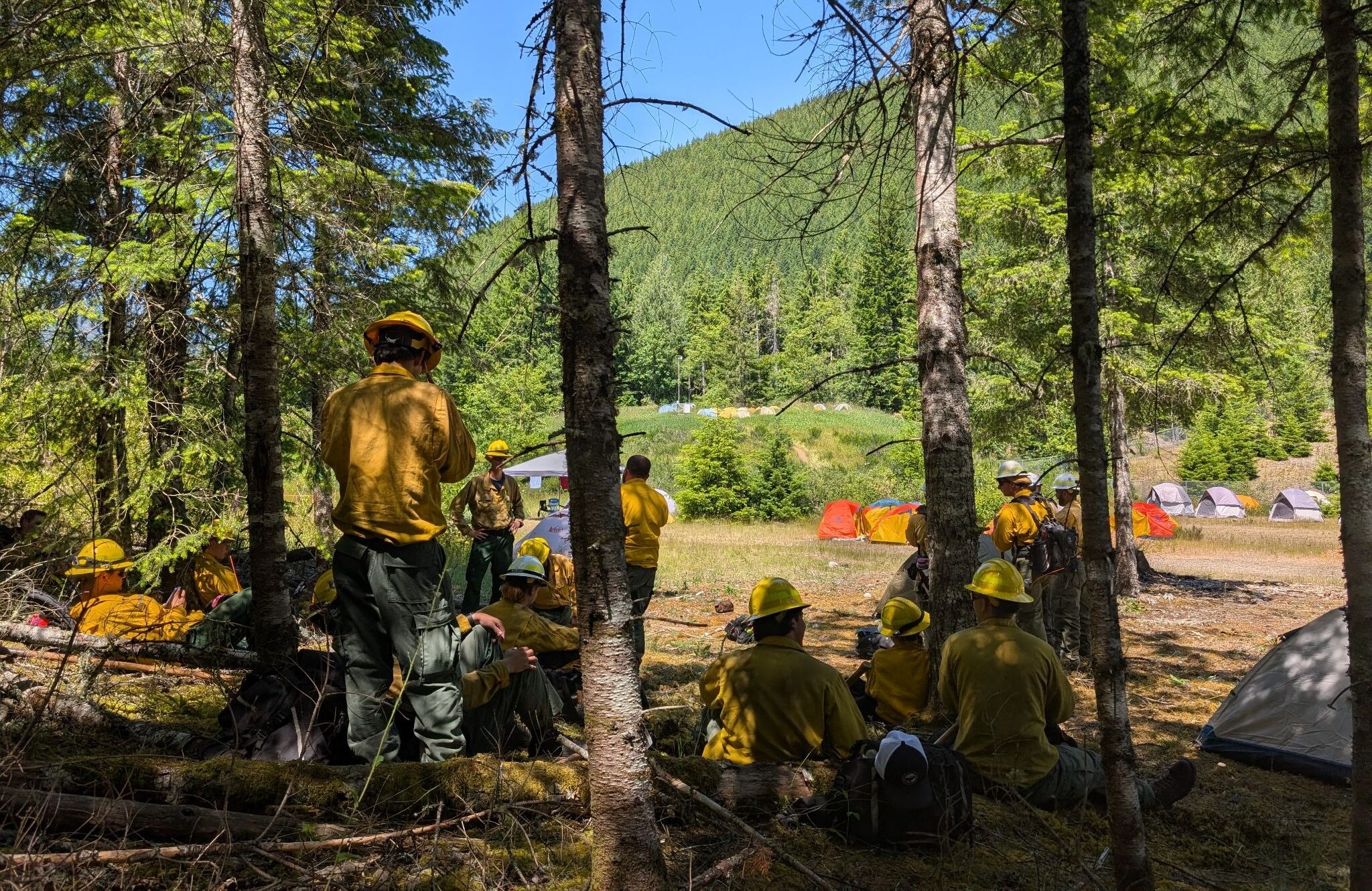
Gustavo and fellow hand crew stop to rest during academy training.
Training at the Academy
Earning his red card was no easy feat. While attending Washington DNR’s Wildland Fire Academy in June 2026, Gustavo practiced his emergency response to high-risk scenarios, operated varied fire engines and containment equipment, and passed the pack test required for arduous duty. “It’s relatively simple as long as you train for it,” Gustavo says regarding the pack test, “it’s a 3 mile walk wearing 45 pounds under 45 minutes.” To control how quickly a fire spread, Gustavo also practiced igniting fuels ahead of an approaching fire. “Believe it or not, all firefighters are required to carry a lighter– like road flares, drip torches, or propane torches, to be able to start a fire,” he says.
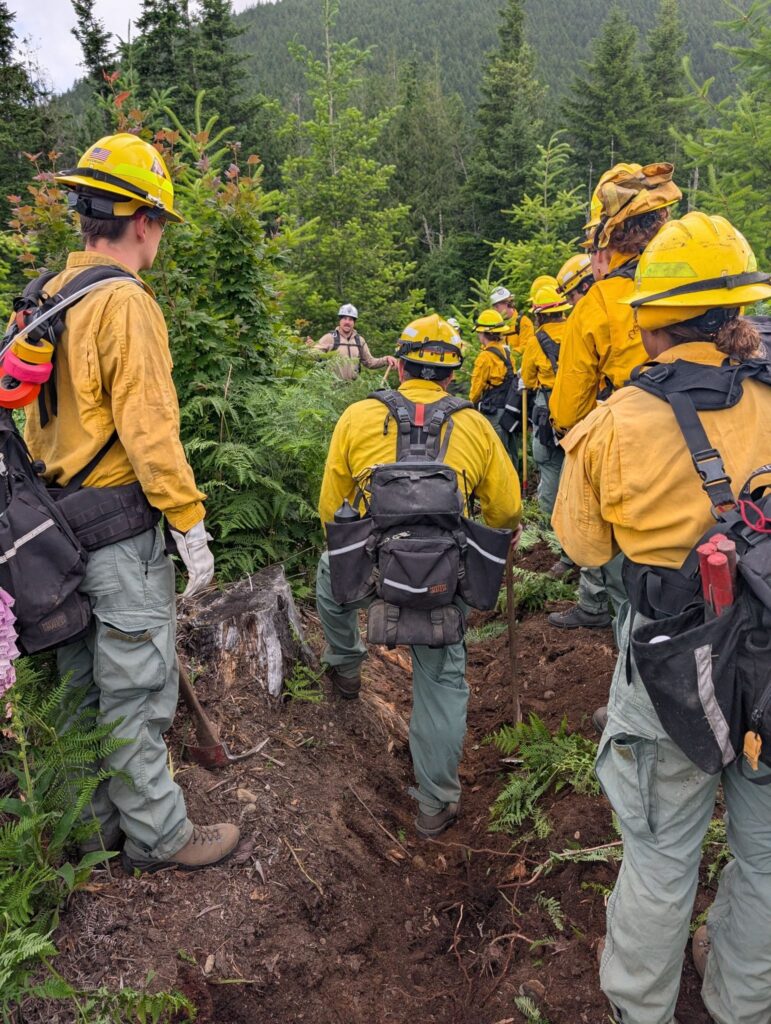
Fireline training at the Wildland Fire Academy in North Bend, WA.
For fire prevention, structure patrols taught students how to prevent an active fire from engulfing high-risk buildings. According to Gustavo, “this can include moving fuel cans, cutting limbs down to reduce ladder fuels, mowing the grass down, and cutting entire trees down. We don’t [always] have to cut the whole tree down, but if we cut down the limbs that would help.” Though high-risk structures are expected to burn in a wildfire, students were instructed how to prioritize which structures would benefit from fuels reduction around them. “You only have a certain amount of time before the fire catches up,” he says.
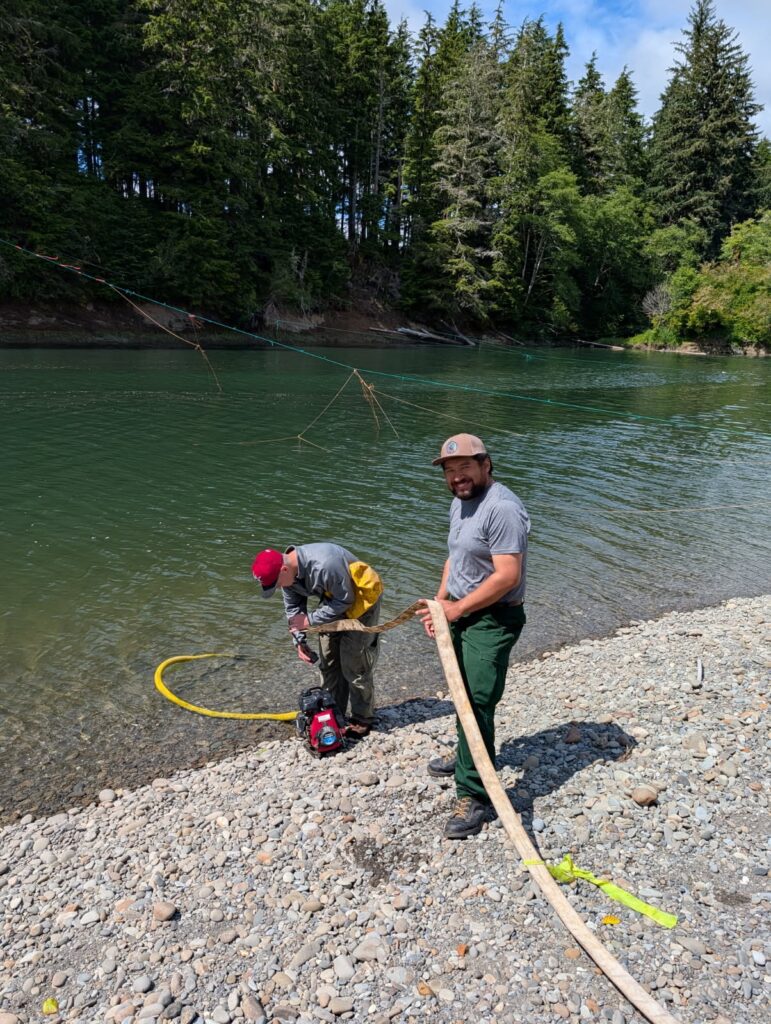
Gustavo refills the fire engine’s water tank with a hose from a nearby river.
Looking Ahead
With a long fire season still ahead, Gustavo is ready to respond at any moment. Unlike the Washington DNR’s full-time, seasonal firefighters, Gustavo works full-time as a QDNR forester first and on-call as a co-op wildland firefighter who could help a cooperating agency that needs extra crews, such as the Forest Service or Washington DNR. However, his priority is now fighting wildfires on the Quinault Reservation; when the next wildfire starts, Gustavo will be assigned to control it until the fire is extinguished. That’s why Gustavo says wherever he travels, he keeps his firefighter and camping gear in his truck at all times. “It’s a tough line of work. If you want to get into it, it’s pretty much available to anyone who wants to start off doing this kind of work. It’s a great starting point for a lot of career paths to get out there.”
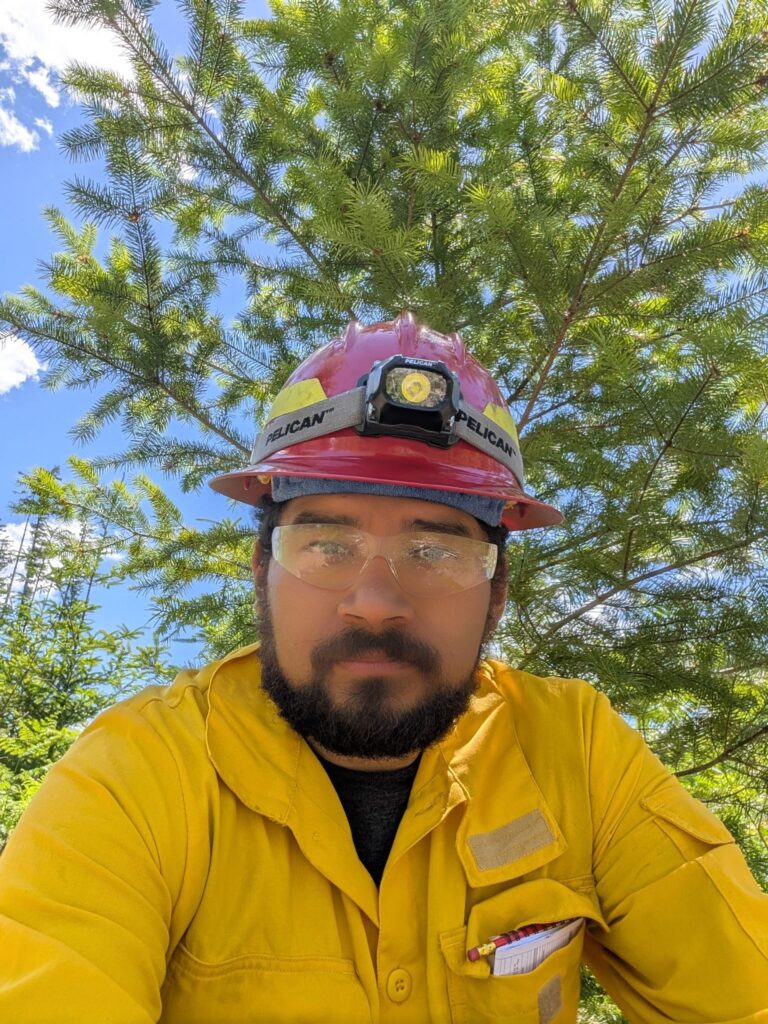
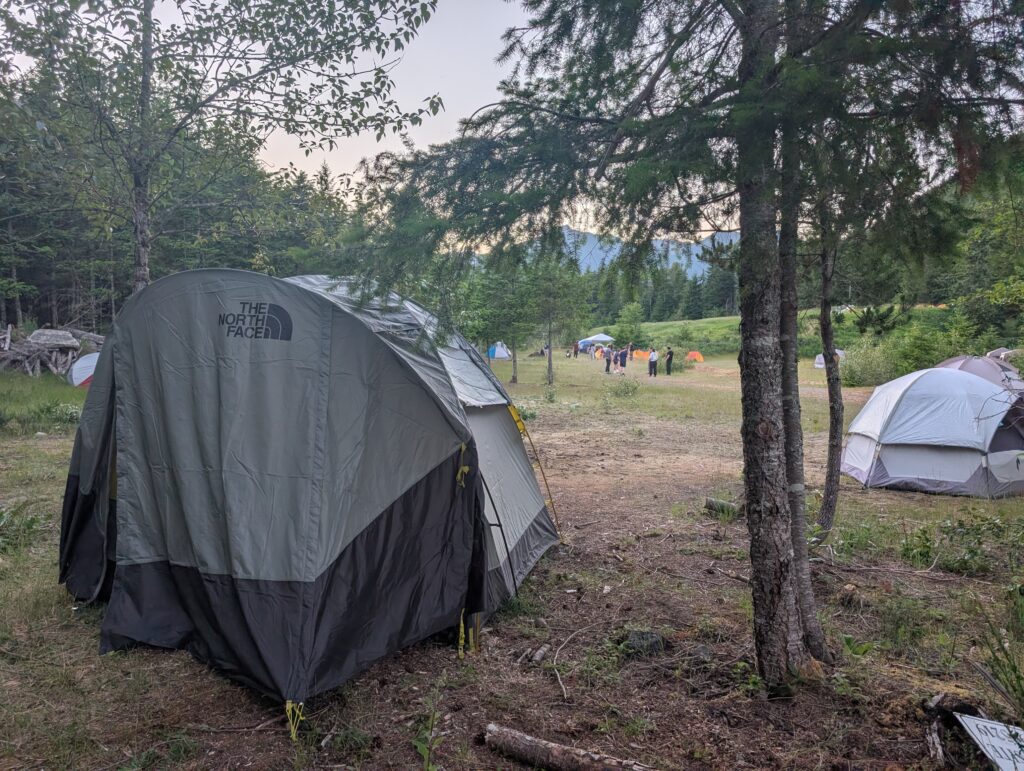
Gustavo in firefighting gear (left) and tent setup (right) during the academy training.
For more information on how to reduce your home, forest, and community’s wildfire risk, check out NNRG’s Resource Library. To learn more about Gustavo’s experience in wildland firefighting and forestry, join us on September 16th for our next Fireside Chat!
Leave a Reply