
Fall Planting Guide
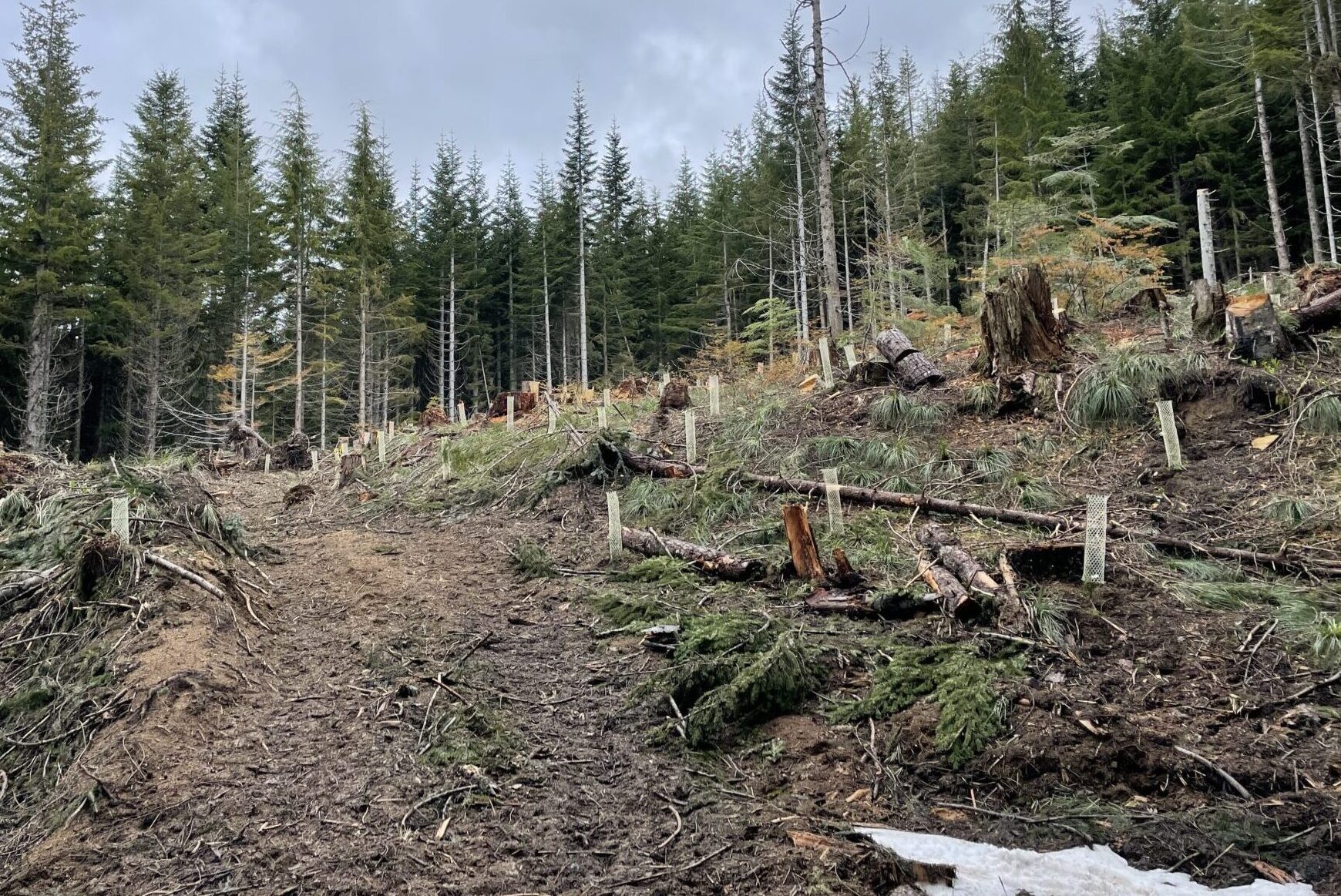
As temperatures and autumn leaves drop across the Pacific Northwest, fall is the perfect time to begin thinking about next year’s planting project. Though some projects may require spring planting, our region’s native trees and understory plants thrive when strong, healthy root systems are established in autumn’s temperate conditions and rainfall. Want to boost your seedling’s growth, drought tolerance, and long-term resilience? Read our fall-friendly guide for jumpstarting your forest’s spring growth below.
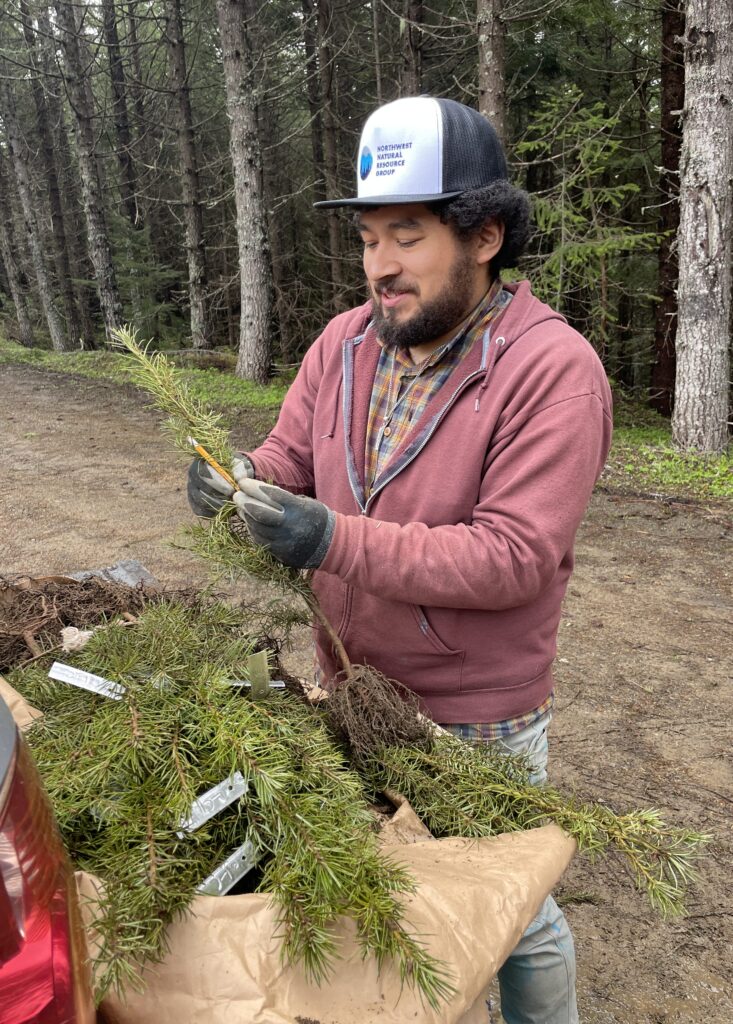
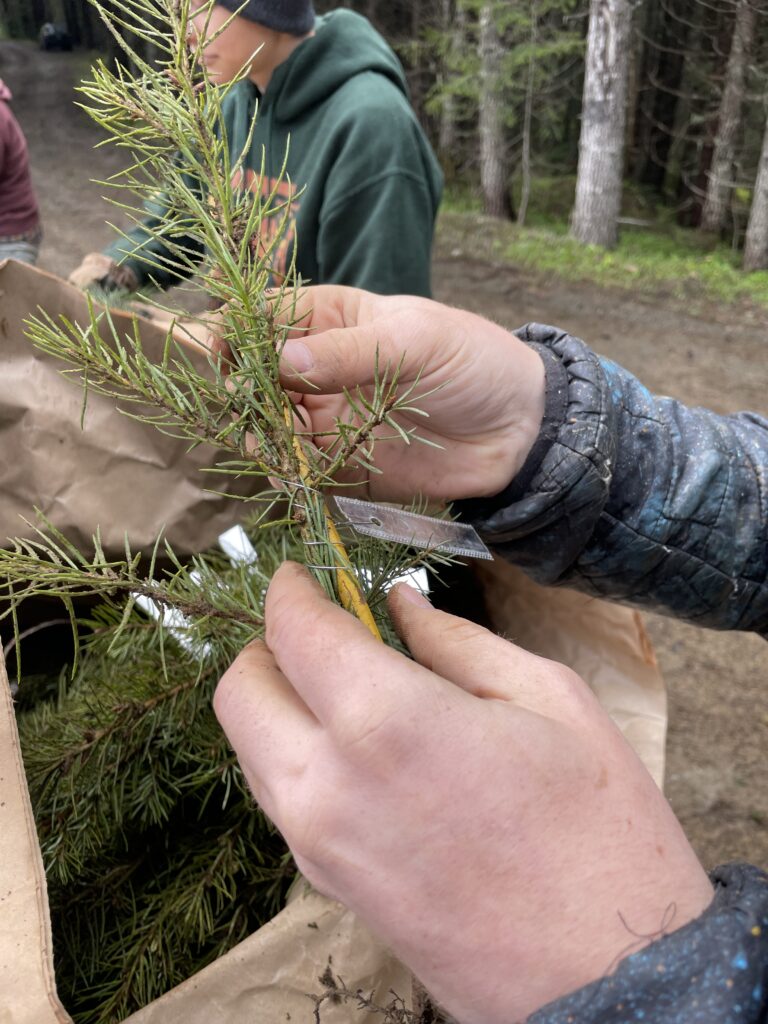
NNRG Restoration Forester Gustavo Segura Flores processes conifer seedlings for planting (left). A forestry crew member holds a conifer seedling (right).
Make a Plan
Before planting, it is important to consider your landscape as a whole. First, determine the size and scale of your project. While individual seedling care will be easier in smaller projects, you’ll need to hire crews for large, landscape-scale planting endeavors. Need technical or financial assistance to accomplish your project? Your local conservation district and federal cost-share programs like CSP and EQIP can provide free resources to get you started.
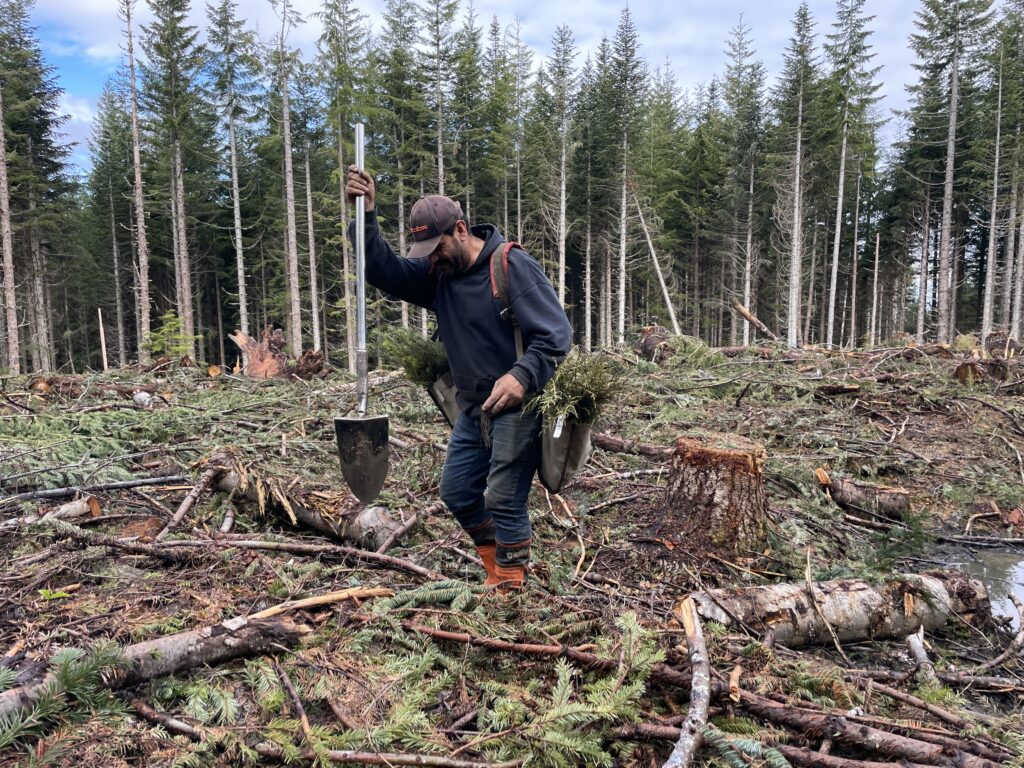
Using a planting shovel, a forestry crew reforests the landscape with seedlings after timber harvest.
After deciding your project’s scope, evaluate your site’s characteristics. What are the soil and moisture conditions like? Are there other factors, like soil erosion, affecting your site? Your site’s unique features, geography, and conditions in mind as you create a planting plan for your site. Some important factors to consider include:
Soils
Soils are the foundation of every planting project. In addition to supporting robust spring growth, high-quality soil supports retains moisture during drought. As compacted soils reduce water absorption and may stunt plant growth, loose, loamy soils are ideal for most types of planting. For large-scale projects, planting species suitable to your current soil will reduce costs and labor of soil amendments. For more information, check out this helpful soils guide by WSU Extension.
Moisture
When deciding your plant list, moisture availability is another essential site consideration. Is the soil dry, moist, or (seasonally) wet? Does the soil drain well, or do compacted soils prevent water from adequately penetrating? In addition to the actual rainfall a site receives, other factors like soil compaction and nearby vegetation affect moisture availability. Steep slopes and compacted soils can increase water runoff, reducing a plant’s water absorption. Plant near pre-existing vegetation to shade your planting, reduce run-off, and increase moisture retention.
Sunlight
Similar to moisture, you should evaluate your site’s sunlight availability to inform your planting plan. Is your site full, direct sun or in deep shade? Select plants that suit your site’s current sunlight availability, while also considering the future conditions. For instance, sun-loving seedlings may struggle long-term if shaded by a maturing forest canopy. The direction of your slope (aspect) will also affect your site’s moisture content. In the Pacific Northwest, south-facing slopes are drier and hotter due to greater sun exposure, while shaded, north-facing slopes will be cooler and moister.
Additional Considerations
To complete your plan, evaluate any other key site considerations or desired improvements. Is your site on a slope where soil erosion is a concern? Do you have persistent, widespread invasive species? To mitigate soil erosion, consider planting species with root systems effective at stabilizing soil. Are sun-loving invasives crowding your landscape? Plant trees that will increase canopy cover and shade out these invasive species for a lower-maintenance long-term management strategy. Lastly, identify anything missing from your landscape. Do you want to attract wildlife and pollinators? Consider adding rock and habitat piles, snags, water features, bat or bird boxes, and native meadows.
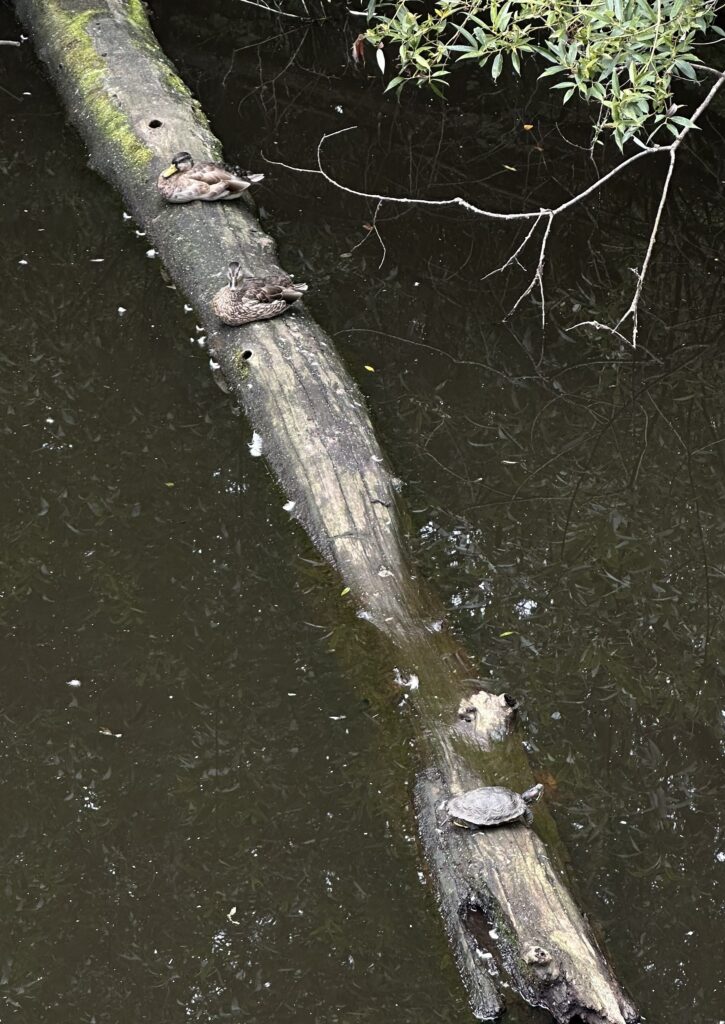
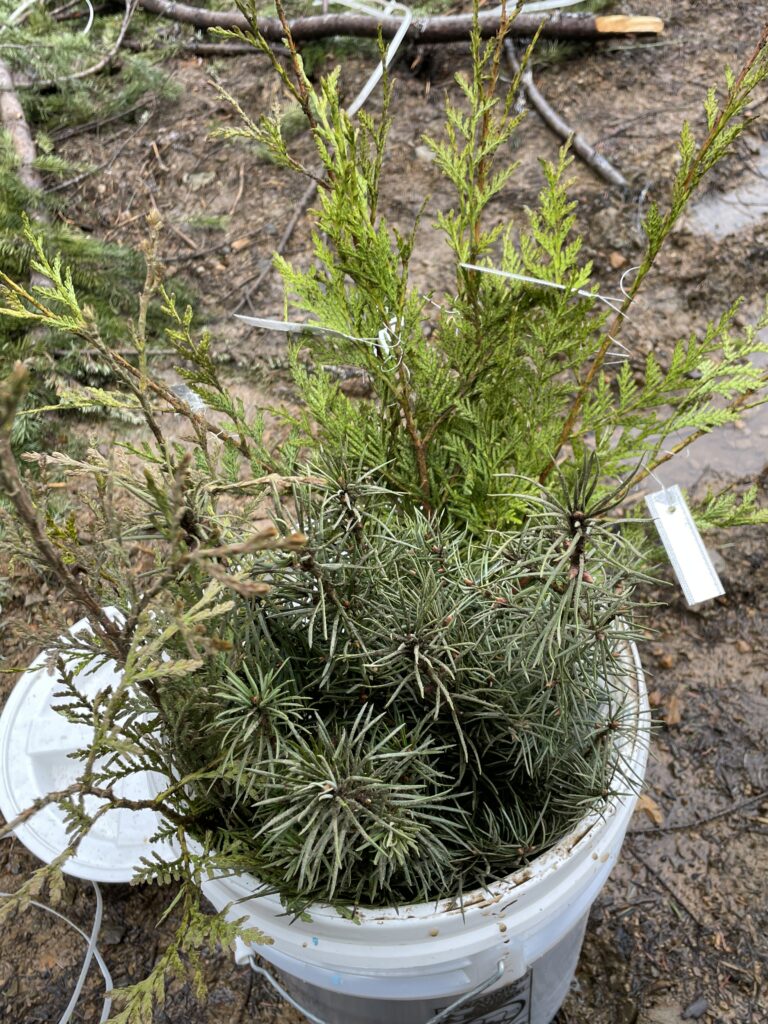
Ducks and a turtle sunbathe on a fallen log (left). Douglas-fir and cedar seedlings ready for planting (right).
Need help finding plant species suitable to your site? Check out King County’s Native Plant Guide to search by plant type, moisture requirements, sunlight tolerance, and more!
Pro Tip: If you’re planting native species, familiarize yourself with the plant’s scientific names. Some nurseries may sell cultivars, nativars, or hybrids of similar (but non-native) species that do not provide the same benefits. Understanding your plant’s scientific name will help you distinguish and source the correct species.
“How to” Guide for Fall Planting
Site Preparation
After evaluating your site, it’s time to begin groundwork. Remove invasive species with your preferred invasive species removal method and prepare your soils for planting. To reduce soil compaction, consider sheet mulching or using a core aerator (manual or self-propelled) to improve soil structure. Sheet mulching is also an effective method for weed suppression in smaller areas. Avoid operating heavy machinery and incorporating soil amendments when the soil is wet, as the disturbance and weight will worsen compaction.
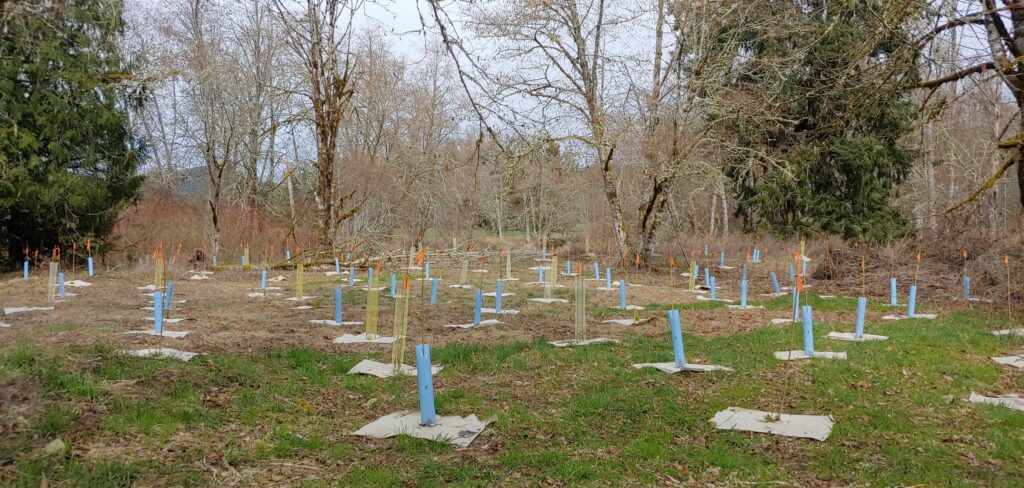
Near the Skookumchuck River, paper mulch mats inhibit grass competition to help seedlings establish. Tree cages prevent deer and elk browse to further promote seedling growth.
To begin sheet mulching, place two layers of flattened, untreated cardboard in the desired area, and secure the cardboard to the ground with staples or large rocks. Layer or interlock the cardboard so there are no coverage gaps. Apply at least 2-3” of mulch on top of the cardboard. Since sheet mulching promotes soil health while adding slow-release nutrients, regular applications may reduce the need for rototilling, weeding, and extra watering. For sourcing cardboard, we recommend checking out your local grocery and hardware stores, as many provide free cardboard upon request.
Pro Tip: Because the cardboard will decompose directly into the soil, only use untreated (unwaxed, non-plastic coating) cardboard. Many water-resistant delivery boxes commonly contain chemicals that should be avoided in sheet mulching. If you’re unsure if your box is treated, you can check by searching your retailer’s cardboard treatment practices online.
Planting Basics
Once ready to plant, arrange your seedlings at your desired location and density. Consider clustering multiples of each plant type and related species to mimic the clumped vegetation found in the natural landscape. Use a planting shovel to dig a hole 2-3x the size of your root wad, then partially refill the hole with loose soil. If needed, remove your plant from its container and gently massage the roots.
Video: NNRG Forester Gustavo Segura Flores unwraps a bundle of seedlings for planting.
After loosening the potting soil, spread the roots outward inside the hole. Holding the seedling at the correct height, continue refilling the hole with soil. Periodically check to ensure the root flare remains level with the surface. Soil should not bury the root flare, nor should the roots become exposed. To prevent air gaps, compress the refilled soil by stepping lightly around it. Check the root flare again to see if soil compression has exposed any roots. Add more soil if needed, and compress the soil once more. Apply a mulch ‘donut’ around the plant and water once complete.
Pro Tip: Abundant rainfall means fall-planted trees typically require little (or no) extra watering. If additional watering is needed, only water in the morning or evening. Once seedlings are established, water deeply but infrequently.
Mulch Applications
Looking for more ways to boost your seedling’s health? Mulch is a popular choice for many planting projects – and for good reason. Easy to use and cost-effective, mulch applications protect new plantings and can suppress unwanted growth. For mulching new and established seedlings, apply mulch directly to the soil. A good mulch donut insulates and retains moisture, but excessive mulch placed too close (within 3-6” of the base) will smother the plant. For woody plants, apply a woody mulch; for annuals and perennials, apply a leaf-based mulch or compost.
Browse Deterrents
To prevent tender seedlings becoming a tasty snack for wildlife, consider installing a browse deterrent. While browse refers to a plant’s woody growth, “browsers” are the herbivores that eat these woody plants. In western Washington and Oregon, the most common browsers are deer and elk.
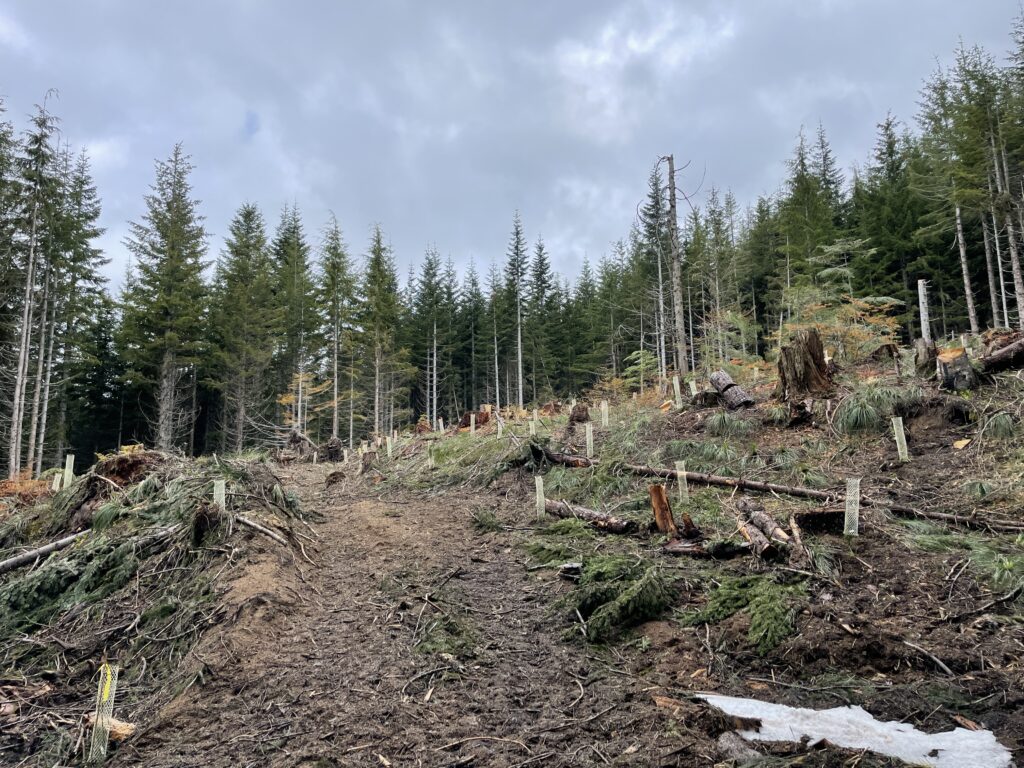
Reusable tree cages dot the landscape after harvest. These reusable deterrents discourage browse, increasing seedling survival.
Video: A crew member installs a tree cages to deter seedling browse.
Depending on your management preferences, install tree cages or select browse-resistant plants to reduce unwanted browse. If some browse is tolerable, planting deer-resistant plants will discourage browsing without requiring additional management action. When browse must be avoided, install a tree cage (or fence) to exclude deer and elk.
Pro Tip: Place a bamboo stake with bright flagging inside your tree cage to easily relocate seedlings in the future. Use a different color flagging for each species to identify plants at-a-glance.
For more information on native plants for restoration, join us for our Fireside Chat on October 21, 2026. Featuring Lea Dyga from Oxbow Farm & Conservation Center, we’ll discuss tips for responsible sourcing, fall planting, and how to select/care for native plants. Additional resources are available at our resource library.
Leave a Reply