Seeing the Forest through the Trees
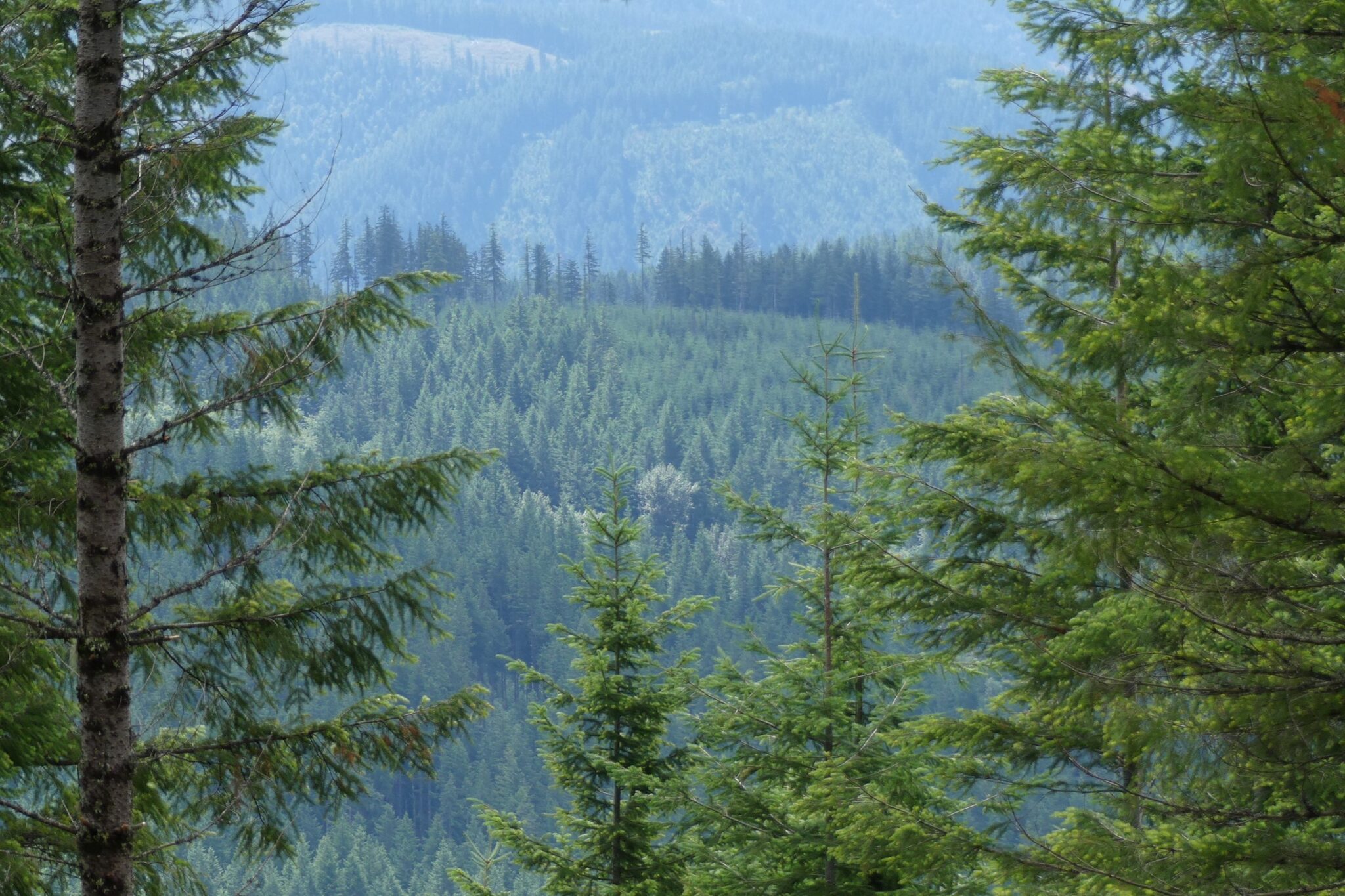
What are our foresters up to? NNRG recently caught up with lead forester Chase Beyer while he was overseeing a harvest at the Nisqually Community Forest (NCF) to find out what was on his mind. Chase grew up in the south Puget Sound; before NNRG, he managed UW’s experimental Pack Forest where he honed his skills in forest management and harvest operations. Today, Chase continues to apply that experience to help landowners achieve their harvest goals.
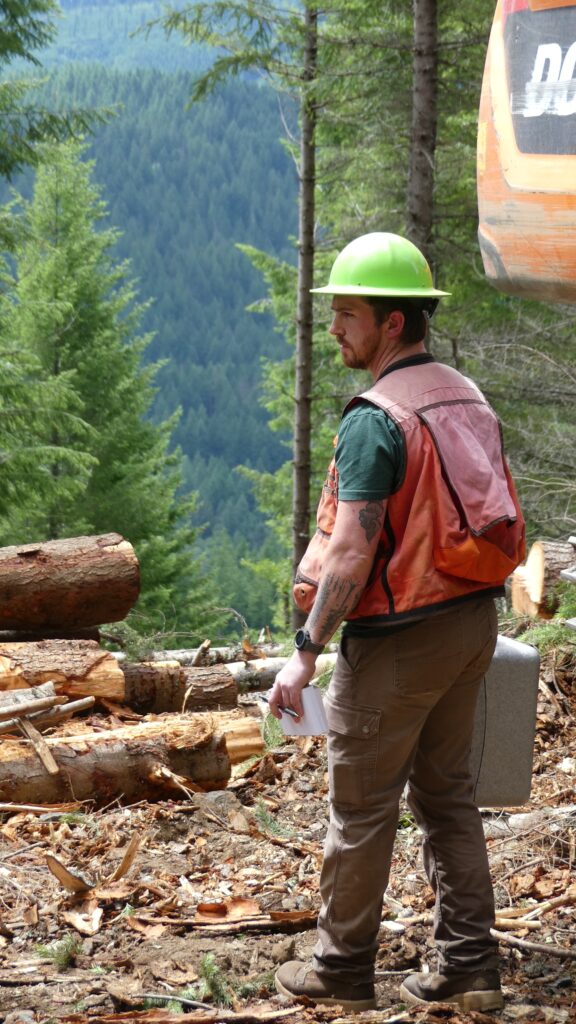
Chase evaluates harvest underway at the Nisqually Community Forest (NCF).
Managing Objectives
For small woodland landowners who have not logged and sold timber previously, undertaking a timber harvest can be a daunting task. Unlike other forest management activities, like planting or invasive species control, timber harvests occur less frequently and require more logistical coordination. What’s more, they are inherently a higher-stakes proposition, because if they are poorly executed, a lot more damage can be done quickly than with a planting shovel or machete. Where should a landowner start? And how can landowners balance financial and ecological needs in their stewardship?
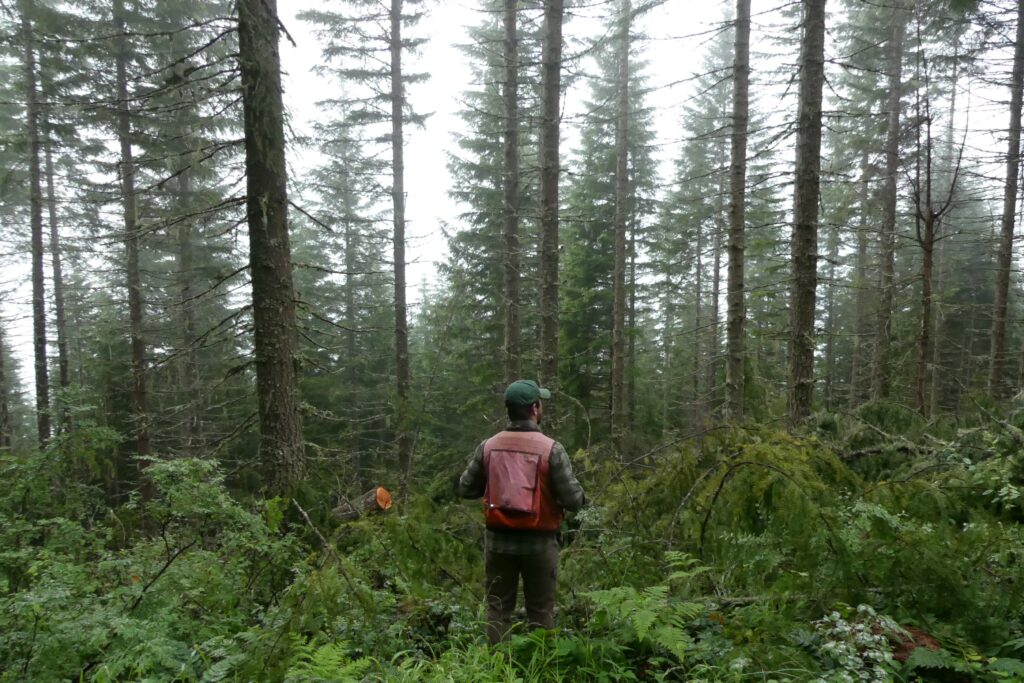
Chase surveys a Douglas-Fir stand scheduled for harvest in August 2026.
To help landowners achieve their full vision for their forest, Chase’s first priority is helping landowners identify their overarching goals. Once a landowner’s most important values have been identified, the harvest outcome can be tailored to align with those objectives. For landowners whose priority is timber production, Chase will assess which ecological management options will be most compatible with that revenue target. “If the landowner has a harvest revenue target in mind, then the goal is clear,” says Chase. For those seeking to increase their forest’s health, certain approaches to harvesting can increase biodiversity, enhance wildlife habitat, and reduce stand competition while aligning with the landowner’s financial goals. “Ecological management and timber harvesting are not inherently opposed, but it’s a balance.”
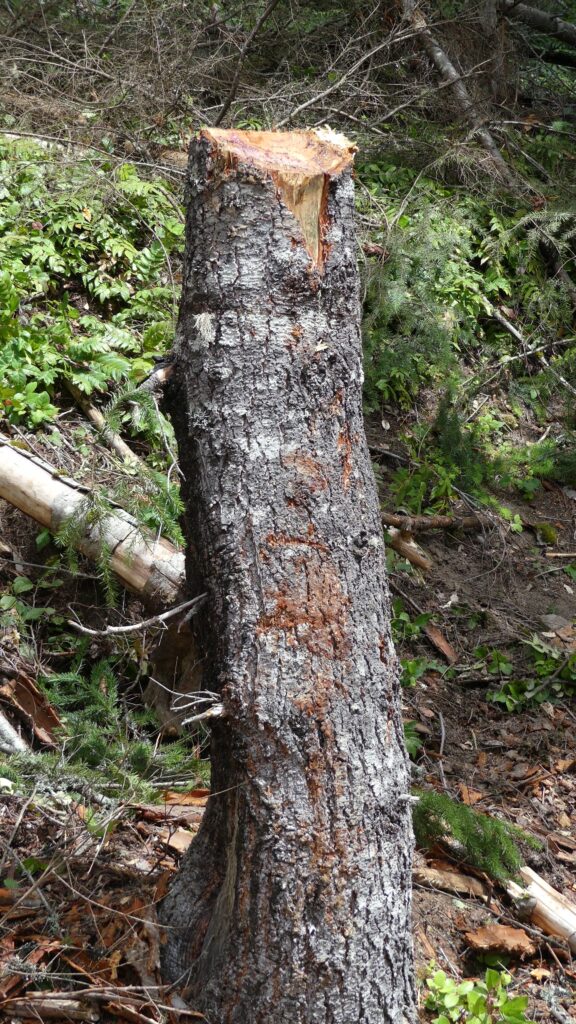
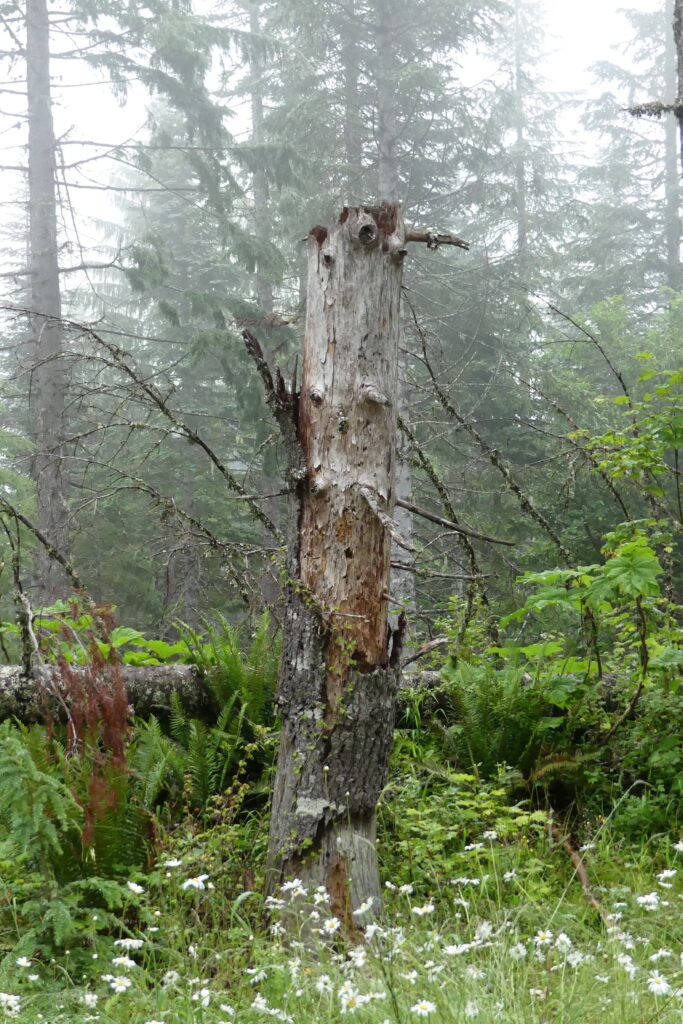
A freshly cut tree (left) will eventually become a snag (right).
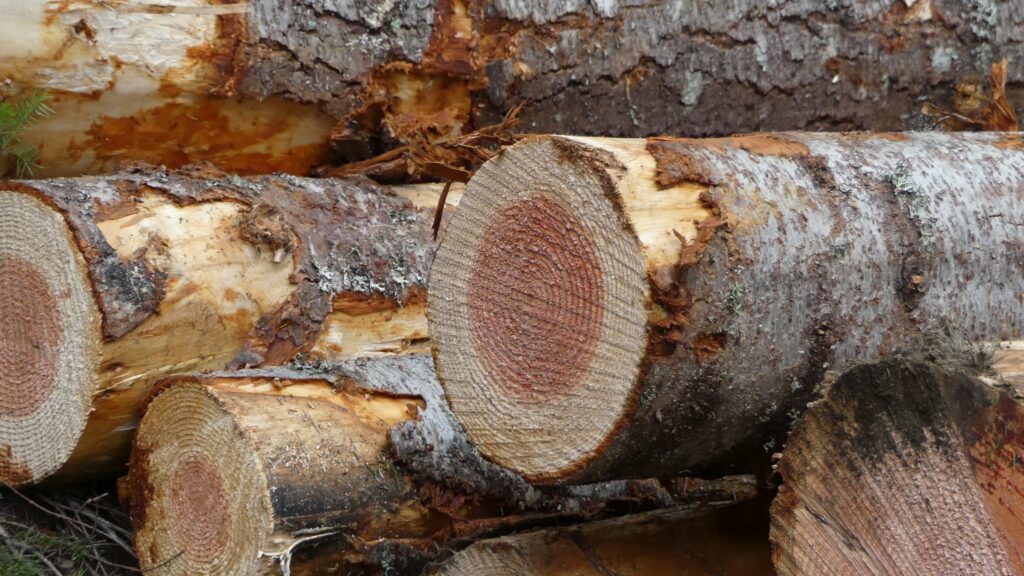
Freshly harvested Douglas-Fir logs await shipment to the mill.
Land Rich, Cash Poor: Financing Harvest and Forest Stewardship
For many, the financial feasibility of a timber harvest remains a forefront concern. Ongoing maintenance costs, living on a fixed income, and low timber revenue are all factors that may hinder forestland owners’ ability to commercially thin. Because commercial thinning is more expensive per thousand board feet (MBF) shipped to market than clearcutting, the landowner’s portion of the revenue is reduced. However, proper planning and matching landowner priorities with the right logging crew may lower these costs.
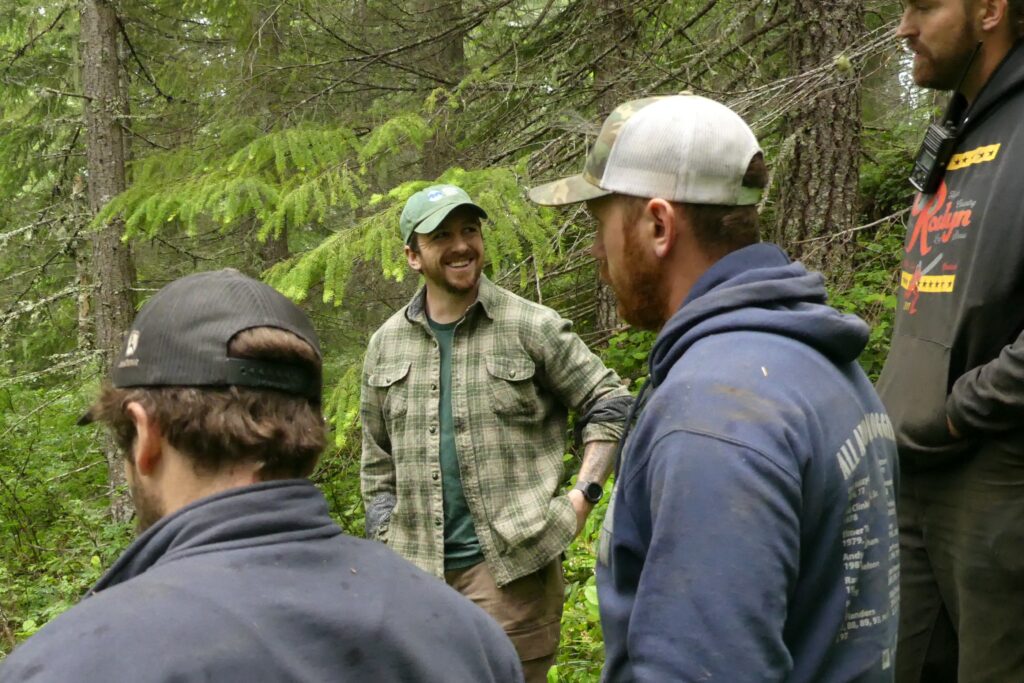
Chase discusses plans for an upcoming harvest with the logging crew at NCF.
For Chase, safety and collaboration are at the heart of his harvest operations. “The first branch in the decision making tree is the topography (or slope) of the thinning area. Can we safely access the site from multiple points and move equipment?” The next issue is cost. If slopes are gentle, ground-based yarding is preferred because it is less expensive. In fact, on smaller parcels (under 20 acres), it may be the only yarding system that is feasible because otherwise, the cost of moving equipment onto the site will outstrip the revenue that would be left over for the landowner after paying the logging and administration costs. On larger sites with steeper slopes, a cable system, yoder, or tower yoder may be used, though are generally more expensive to operate due to increased labor costs and operational risks. (To learn more about different types of harvest equipment, check out NNRG’s Field Guide to Harvest Equipment.)
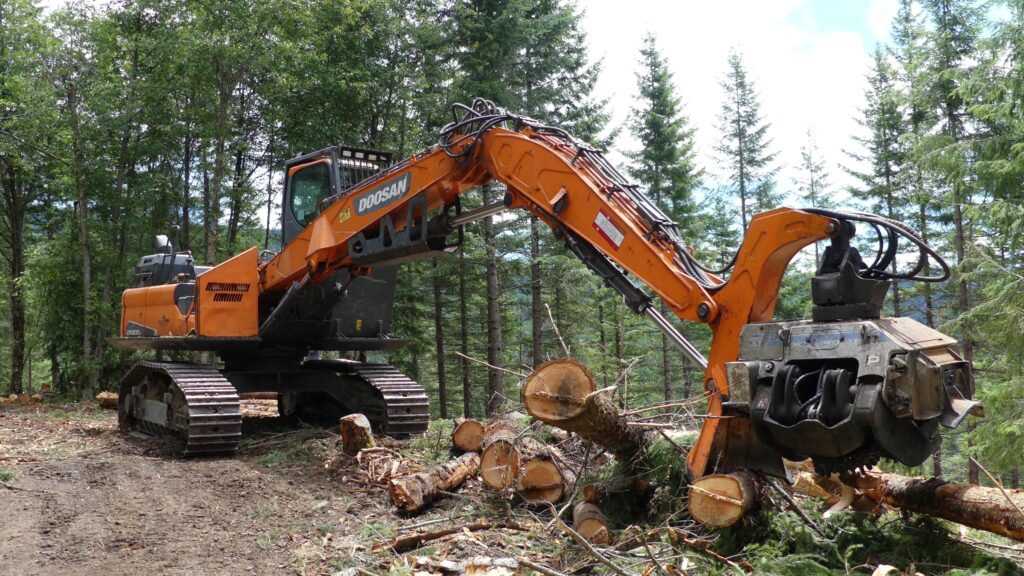
A processor mid-harvest at the NCF.
After collaborating with the landowner on their harvest priorities, Chase contacts a handful of NNRG’s vetted loggers which match the landowner’s objectives. Whereas some loggers excel at a production-focused harvest, others may best suit an aesthetics-oriented project. By forming lasting partnerships with a variety of harvest crews, Chase tailors harvest operations to bring each forest owner’s vision to life. Once the logger’s availability is confirmed and a fair price negotiated, the landowner’s harvest is scheduled.
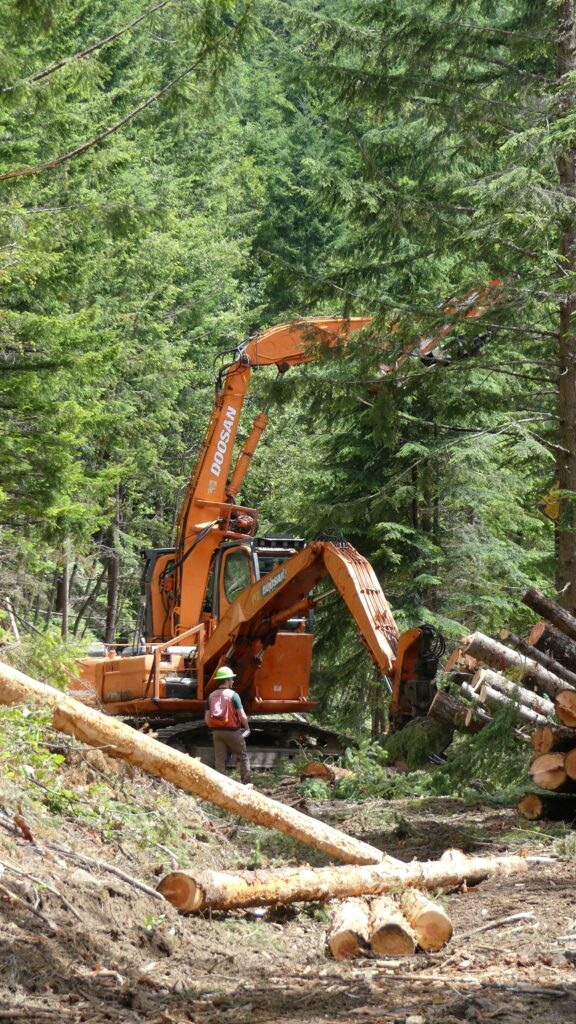
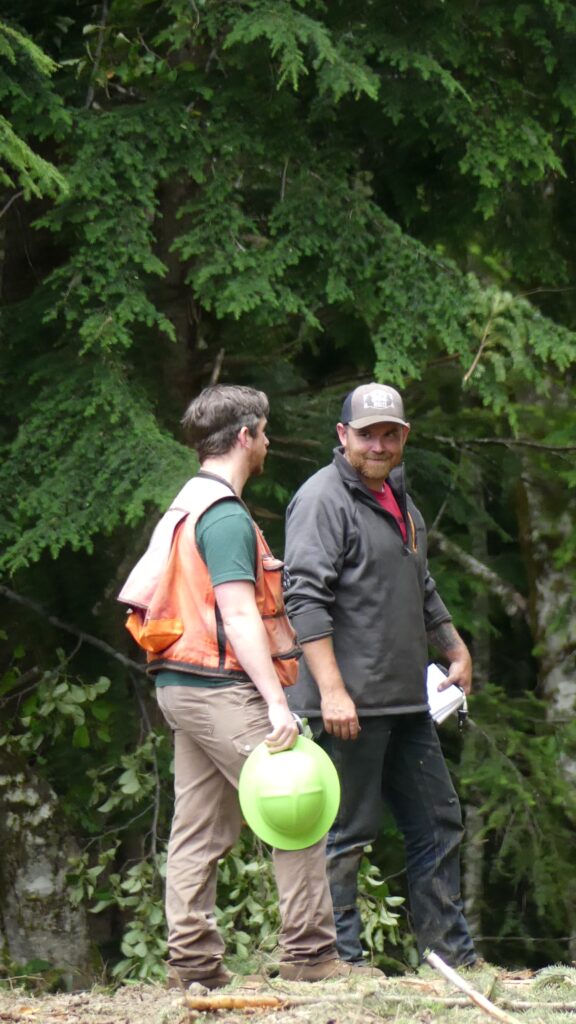
Chase and a logger check-in on the progress of an ongoing harvest.
Although most cost-share programs like the Environmental Quality Incentives Program (EQIP) won’t help with the costs of commercial logging, they can defray the costs of stewardship projects that might follow a commercial thinning, such as underplanting with under-represented species. In Chase’s experience, most forestland owners qualify for EQIP, where subsidies can reduce or in some cases fully cover project costs. As a result, the program makes ecologically-based timber management (including habitat improvements, native plantings, and invasive species management) financially possible for small forestland owners of all income backgrounds. Chase adds that a working forest conservation easement through local conservation districts may also provide financial assistance for timber harvesting, but that land use criteria vary by county. (To learn more about conservation easements, contact your local conservation district office.)
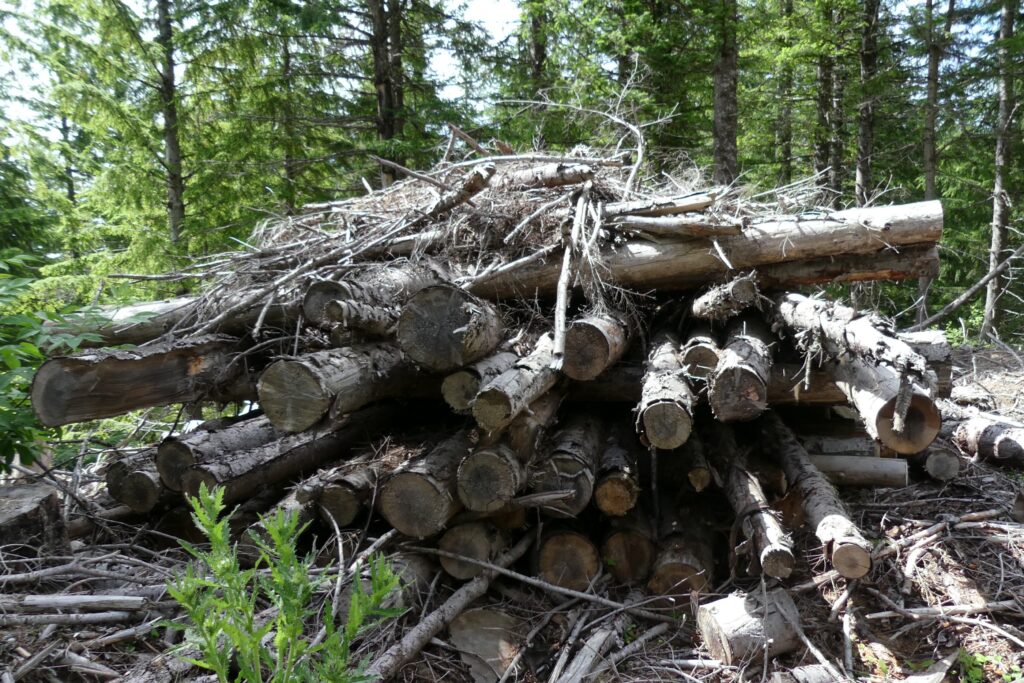
A NCF wildlife habitat pile is now home to a family of pikas.
According to Chase, “ecological forest management is like a tragedy of the commons situation. If every landowner thought that their forest stewardship work didn’t matter, that effect would be massively felt throughout the region.” In aggregate, small forest landowners own 3.2 million acres in Washington state, and another 3.5 million in Oregon, so their stewardship reverberates across the landscape. According to the National Woodland Owners Survey, the top three motivations for small landowners are enjoyment of beauty and scenery, provision of wildlife habitat, and privacy. They may produce less timber per unit area than industrial owners, but it’s because they are solving for a different combination of goals.
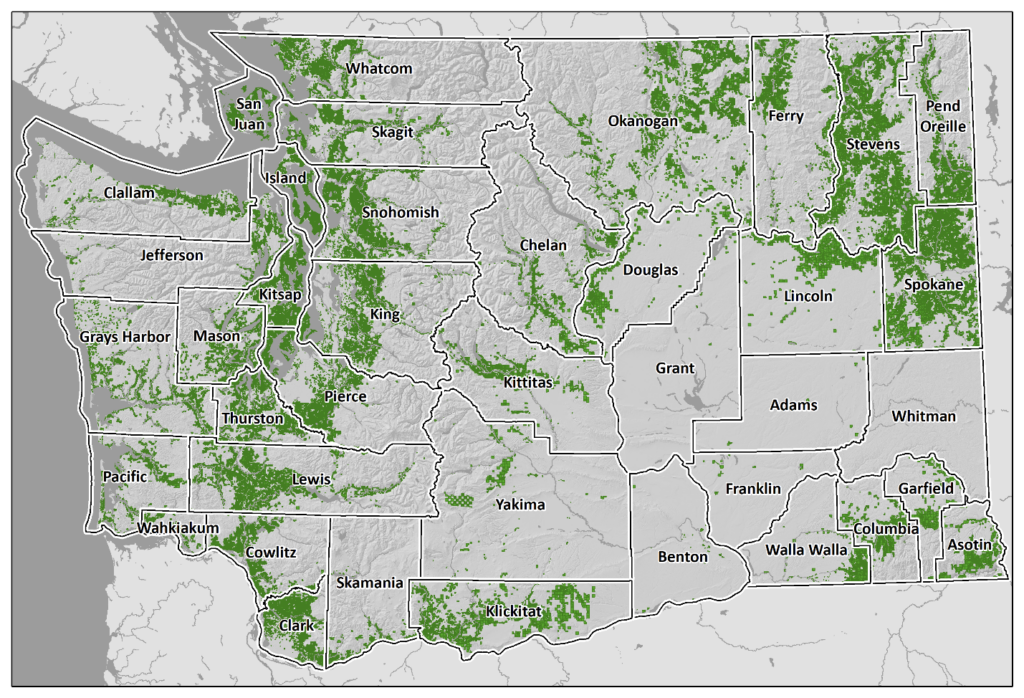
A map of small forest ownerships in Washington State according to a 2007 report by the University of Washington.
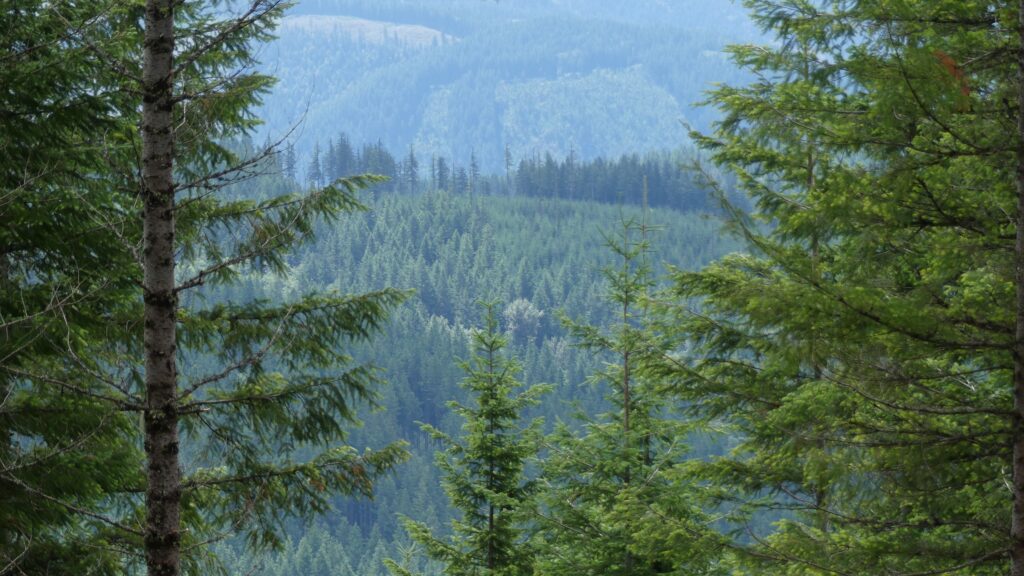
Douglas-firs growing across the Nisqually Community Forest landscape.
A ‘One-Stop Shop’ for Forest Management
For landowners looking to plan their harvest, the process may be daunting. “No two timber harvests are alike,” Chase concludes. Having already helped numerous landowners achieve their harvest goals, Chase encourages anyone interested to reach out to NNRG. NNRG works with landowners to provide both free resources and project-specific support to make the forest management process more approachable. For Chase, increasing landowner collaboration in forest management remains a continual goal. “Don’t be discouraged if you have a big idea within a harvest. At NNRG, we’re used to balancing varied projects and goals. There’s no cookie cutter process for harvest.”
Chase and a logger preview a map of an upcoming harvest.
For more information and resources on managing timber harvests as a small forestland owner, check out Oregon State University’s small-scale harvesting guide.
Leave a Reply